
Claim-rich assets needing fast evaluation
A damaged or underfunded asset may require a quick read on whether there is enough recovery value to justify focused counsel now.

For counsel, advisors & fiduciaries
A focused recovery role with clear status and decision communication for serious property, insurance, construction, delay, and project-loss disputes where existing counsel or advisors remain in place.
No fee unless money is recovered on accepted matters, subject to a written fee agreement.
A damaged or underfunded asset may require a quick read on whether there is enough recovery value to justify focused counsel now.
The referring lawyer or advisor may want to preserve the broader client relationship while adding a narrow construction-and-insurance recovery role.
The client may already be working with lenders, investors, boards, trustees, receivers, or property managers who need a clear communication structure.
Start with a non-confidential summary; provide contracts, policies, and selected claim documents when requested after the conflict and initial review.
A direct read on whether the problem appears to support a focused recovery role, whether contingency may fit, and what documents are still missing.
Clarity about who is communicating what, how the role is described, what status updates are needed, and whether local counsel or co-counsel needs to be involved.
Any co-counsel, referral-fee, fiduciary, or local-counsel arrangement is handled only as permitted by applicable rules and written agreements.
Start with a short non-confidential summary. Prepare these records and provide selected documents when the firm requests them after initial review.
Confirm the proposed claim-specific role, who communicates with the client, the next decision, and how the existing relationship will continue. Any co-counsel, referral-fee, fiduciary, or local-counsel arrangement is handled only as permitted by applicable rules and written agreements.
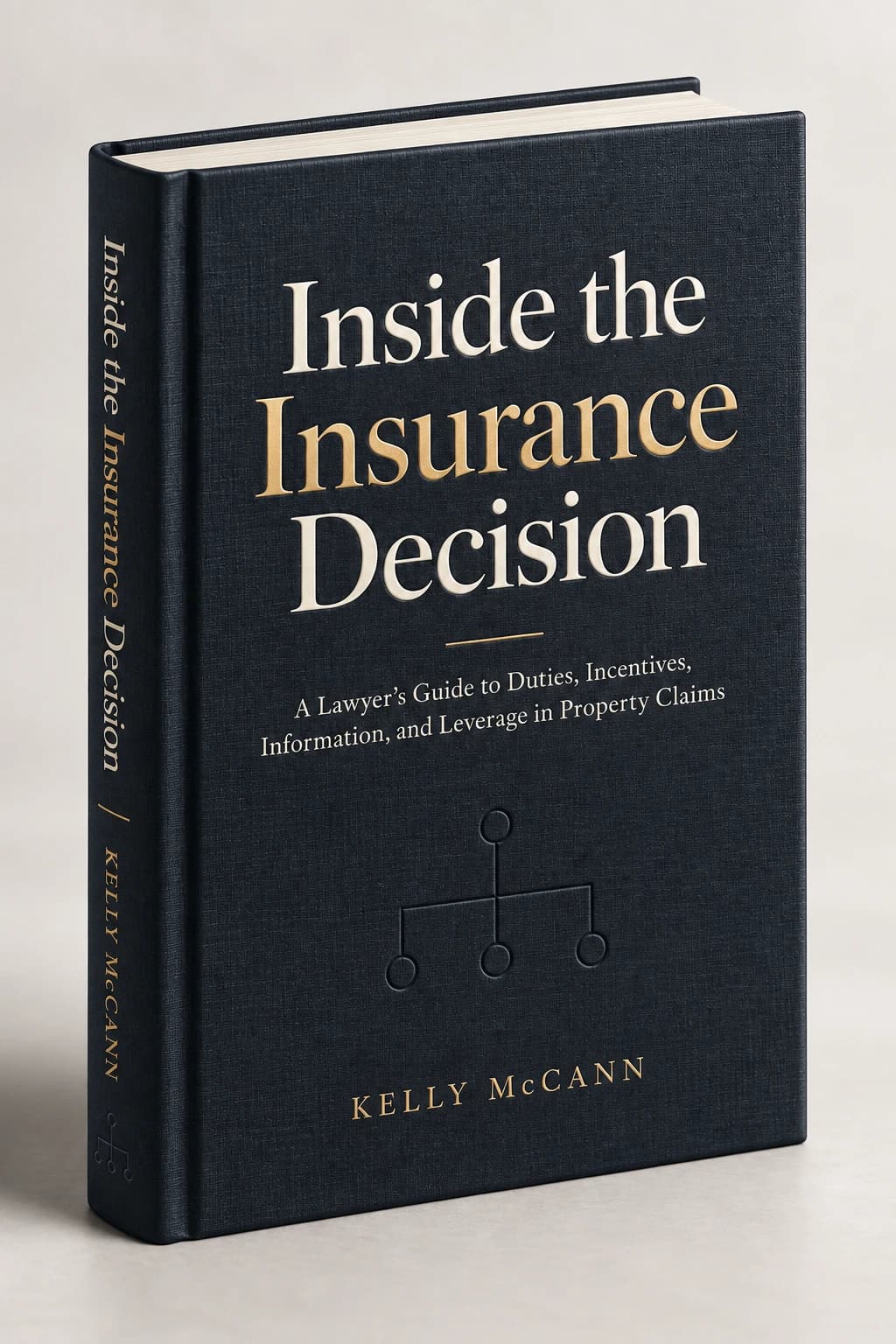
For lawyers · Kelly McCann
A book for lawyers examining the duties, incentives, agency costs, and information flows behind claim evaluation and resolution.
Explore the bookIdentify the dispute, your role, the existing team, and any time pressure in a non-confidential summary.